MOLEX 1120115034 Pci Card Interface Development PCU-DP2IO
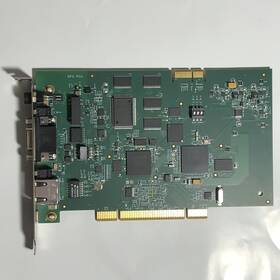
( Brand: Molex ), ( Manufacturer Part Number: 1120115034 ), ( Model: MOLEX PCU-DP2IO 1120115034 ), ( Type: Digital Interface Adapter Plate ), ( Country Of Origin: United States )
Review MOLEX Pci Card Interface Development
The **Molex 1120115034 PCU-DP2IO PCI Card Interface Development Kit** is a high-performance, versatile hardware solution designed to bridge the gap between legacy PCI-based systems and modern digital I/O requirements, making it an indispensable tool for engineers, developers, and researchers engaged in embedded systems, industrial automation, or custom hardware prototyping. This compact yet robust PCI card features a **dual-port DP2IO interface**, enabling seamless communication with a wide array of digital input/output modules, sensors, and actuators through Molex s proprietary DP2IO protocol. The card s design prioritizes flexibility, allowing users to interface with up to **two independent DP2IO buses**, each capable of handling high-speed data transfers with minimal latency, making it ideal for applications demanding real-time responsiveness, such as motor control systems, data acquisition setups, or automated testing environments.
At its core, the Molex 1120115034 is engineered for ease of integration into PCI-compatible motherboards, offering a straightforward plug-and-play experience while adhering to rigorous industry standards for reliability and compatibility. The card s **PCI interface** ensures seamless integration with modern operating systems, including Windows, Linux, and real-time OS environments, while its **low-power consumption** and **compact form factor** make it suitable for both desktop and embedded platforms. Developers will appreciate the card s **comprehensive documentation**, which includes detailed schematics, API references, and software development kits (SDKs), facilitating rapid prototyping and reducing time-to-market for custom applications. Whether used for research, educational purposes, or industrial automation, this development kit empowers engineers to extend the functionality of their systems with precision and efficiency.
Beyond its technical specifications, the Molex 1120115034 stands out for its **scalability and modularity**, allowing users to expand their I/O capabilities incrementally by connecting additional DP2IO modules as needed. This adaptability is particularly valuable in dynamic environments where system requirements may evolve over time. The card s **high-speed data handling** capabilities, combined with its **low electromagnetic interference (EMI) emissions**, ensure stable performance even in noisy industrial settings. Additionally, the inclusion of **diagnostic tools and error-checking mechanisms** enhances system reliability, providing real-time feedback on data integrity and connection status. Whether deployed in a laboratory for experimental setups or in a manufacturing facility for automated processes, the Molex 1120115034 PCI Card Interface Development Kit serves as a reliable foundation for innovative hardware development, bridging the gap between legacy infrastructure and cutting-edge digital control systems.
The Molex **1120115034 PCU-DP2IO PCI card** is a development interface designed for connecting to Molex s **PCU (Programmable Control Unit)** series, particularly those using the **DP2IO** protocol. Below is a detailed breakdown of its pros and cons, followed by a conclusion and recommendation.
---
### **Pros of the Molex 1120115034 PCU-DP2IO PCI Card**
1. **Compatibility with Molex PCU Series**
The card is specifically designed for Molex s **PCU-DP2IO** modules, ensuring seamless integration with devices like the **PCU-2000, PCU-3000, or other DP2IO-compatible units**. This avoids the need for generic adapters or workarounds, reducing potential compatibility issues.
2. **PCI Interface for High-Speed Data Transfer**
The PCI bus provides a robust and relatively high-speed interface for communication with the PCU modules. While not as fast as modern PCIe, it remains sufficient for many industrial control and automation applications where real-time data acquisition or control is required.
3. **Development-Friendly**
The card is marketed as a **development interface**, meaning it is likely accompanied by **documentation, SDKs, or example code** to help engineers integrate it into their systems. Molex typically provides software tools to simplify programming and debugging.
4. **Reliability in Industrial Environments**
Molex products are known for their **durability and robustness**, which is critical in industrial or harsh environments where equipment must operate consistently over long periods. The card is likely built to withstand typical industrial conditions (temperature, vibration, etc.).
5. **Supports Multiple DP2IO Modules**
The card can interface with multiple **DP2IO-compatible modules** simultaneously, allowing for expanded I/O capabilities (digital inputs/outputs, analog signals, etc.) without requiring additional hardware.
6. **Backward and Forward Compatibility**
Depending on the specific model and firmware, the card may support **multiple generations of Molex PCU modules**, reducing the need for frequent upgrades.
7. **Easy Installation**
As a PCI card, it plugs directly into a motherboard, making installation straightforward compared to USB or other external interfaces that may require additional drivers or power supplies.
---
### **Cons of the Molex 1120115034 PCU-DP2IO PCI Card**
1. **Limited by PCI Bus Speed**
PCI (especially older versions like PCI 2.2 or 3.0) has **lower bandwidth** compared to modern interfaces like PCIe or USB 3.0. If your application requires **high-speed data acquisition (e.g., MHz-range sampling)**, this card may become a bottleneck.
2. **Deprecated Technology**
PCI cards are **less common in modern systems**, particularly in newer motherboards that may lack PCI slots. Many modern PCs use **M.2, PCIe, or USB** exclusively, making this card incompatible with newer hardware without additional adapters (e.g., PCI-to-PCIe bridges).
3. **Potential Driver and Compatibility Issues**
While Molex provides drivers, **older PCI cards can sometimes cause instability** in modern operating systems (Windows 10/11, Linux). Some users may encounter **driver conflicts, IRQ issues, or compatibility problems** with newer OS versions.
4. **No Plug-and-Play Convenience**
Unlike USB devices, PCI cards **require manual installation** (driver setup, BIOS/UEFI configuration in some cases). This can be cumbersome compared to simply plugging in a USB adapter.
5. **Limited Expansion Options**
Modern systems often prioritize **PCIe slots** for GPUs, NVMe SSDs, and other high-performance peripherals. A PCI slot may be **less available** on newer motherboards, forcing users to sacrifice other expansion capabilities.
6. **Power Requirements**
PCI cards typically **do not draw significant power from the PCI slot**, but if the connected PCU modules require additional power, an external supply may be needed, adding complexity.
7. **Potential for Obsolescence**
Molex may **discontinue support** for this card over time, leading to **lack of driver updates, security patches, or new firmware**. This could be a concern for long-term projects.
8. **No Modern Protocol Support**
The card relies on **DP2IO**, which is a **proprietary or legacy protocol**. If Molex shifts to newer communication standards (e.g., Ethernet/IP, Modbus TCP, or USB-based protocols), this card may become outdated without alternatives.
---
### **Conclusion**
The **Molex 1120115034 PCU-DP2IO PCI card** is a **specialized, reliable, and well-suited tool for applications requiring direct integration with Molex PCU-DP2IO modules**. It excels in **industrial control, automation, and development environments where PCI compatibility is not an issue**. However, its **limited by PCI bus speed, lack of modern compatibility, and potential obsolescence** make it less ideal for **high-speed data acquisition, modern PCs, or long-term projects** where future-proofing is critical.
If your application **requires real-time control, multiple DP2IO modules, or industrial durability**, this card is a **strong choice**. However, if you are working with **modern PCs, need high-speed data transfer, or plan to scale beyond PCI limitations**, you may need to consider alternatives.
---
### **Recommendation**
1. **Use the Molex 1120115034 if:**- You are working with **Molex PCU-DP2IO modules** and need a **dedicated PCI interface**.
- Your system **already has a PCI slot** and does not require high-speed data transfer.
- You are in an **industrial or legacy system** where PCI is still viable.
- You need **multiple DP2IO modules** and want a single interface solution.
2. **Consider Alternatives if:**- You are using a **modern PC (Windows 11, Linux, or ARM-based systems)** opt for a **USB or Ethernet-based Molex interface** (e.g., Molex s **PCU-Ethernet or PCU-USB modules**).
- Your application requires **high-speed data acquisition (e.g., >1 MHz sampling)** look for **PCIe or USB 3.0/3.1 interfaces**.
- You need **future-proofing** Molex may offer newer **Ethernet/IP or Modbus TCP-based solutions** that are more adaptable.
- Your motherboard **lacks PCI slots** consider a **PCI-to-PCIe adapter**, but be aware of potential performance trade-offs.
3. **For Development Purposes:**- If you are **prototyping**, test the card in your target environment first to ensure **driver compatibility and performance**.
- Check if Molex provides **virtual machine (VM) or simulation tools** to avoid hardware dependency during early development.
4. **Long-Term Considerations:**- If this is a **critical system**, document the **driver versions and compatibility** to ensure smooth operation as OSes evolve.
- If possible, **supplement with a USB or Ethernet backup interface** for redundancy.
---
### **Final Verdict**
The **Molex 1120115034 is a solid choice for niche applications** where PCI compatibility and DP2IO integration are non-negotiable. However, for **modern or high-performance systems, alternatives should be evaluated** to avoid potential limitations. Always verify **hardware compatibility, driver support, and long-term availability** before committing to this card.
Details:
Therefore this item is sold AS IS. Open to offers. Pulled from working industrial computer, but don't have any way to test card. Don't know much about this item.
part #: 1120115034 prices
- $269.99-$1500.00
specifications automationjack:
- brand: Molex
- mpn: 1120115034
- model: Molex Pcu-dp2io 1120115034
- type: Digital Interface Adapter Plate
- country of origin: United States
general automationjack:
- condition: Used
- Business Industrial > Industrial Automation Motion Controls > Other Automation Equipment
payments automationjack:
- credit card: Diners-club
- other
- wallet: Paypal
seller automationjack:
- city: Wichita, Kansas
- # reviews: 22
- rating: 100.0%
returns automationjack:
- time: 30 Days
- policy: Returns Accepted
- method: Money back
- paid by: Buyer
shipping automationjack:
- type: Calculated
- service: USPS Ground Advantage
- carrier: USPS
- transit: 5-12 Days
- cost: $5.89
- class: Standard
offer automationjack:
- quantity: 1
- sold: 0
- started: April 11, 2026
- best offers: True
- availability: In Stock
- options: Ship-to-home